
Inside only
Internal piles that may bleed but do not come out of the anus.
Homoeopathic Treatment · Itanagar & Online
Bleeding, pain or a swelling while passing stool can be worrying and embarrassing. Piles are very common, and in their early and moderate stages they often respond very well to gentle, individualised homoeopathic treatment.
Medically reviewed by Dr. Jaidev Khatri, BHMS, PGDHHM, SCPH+ · Reg. No. NRH/0087411 · Updated November 2026
Understanding the condition
Piles, or haemorrhoids, are swollen veins in the lowest part of the bowel (the rectum and anus). Everyone has these cushions of blood vessels; they become “piles” when they swell, stretch and start to bleed or come out.
Straining on the toilet, hard stools, long hours of sitting, pregnancy and heavy lifting all raise the pressure in these veins. That is why piles are so common in busy working people, new mothers and older adults.

Types
Internal piles that may bleed but do not come out of the anus.
Come out while passing stool and go back inside on their own.
Come out and have to be gently pushed back with a finger.
Remain outside and can become painful or swollen. Needs careful assessment.
A tender lump at the anal opening; can become very painful if a clot forms.
Causes & triggers
Straining on the toiletPushing hard or sitting on the toilet for a long time.
Low-fibre dietToo little fruit, vegetables and water leads to hard stools.
Long hours of sittingDesk jobs, driving and long travel raise pressure on the veins.
PregnancyHormones and the growing baby press on the pelvic veins.
Spicy and oily foodCan worsen burning and bleeding in some people.
Family tendencyWeak veins can run in families.
Signs & symptoms
How homoeopathy helps
Homoeopathy treats piles from within. Dr. Khatri chooses a medicine for you after looking at your symptoms, bowel habits, diet, work routine and general health. The aim is to reduce bleeding, pain and swelling, make stools soft and regular, and lower the tendency for piles to keep coming back. Many patients in the early and moderate stages find they can manage without surgery.
Medicines are chosen to strengthen the veins and settle bleeding.
Relief from pain, burning and itching.
Treatment works on the tendency, not only on today’s attack.
Many early and moderate cases settle without an operation.
Your treatment at Aushadha Vanam
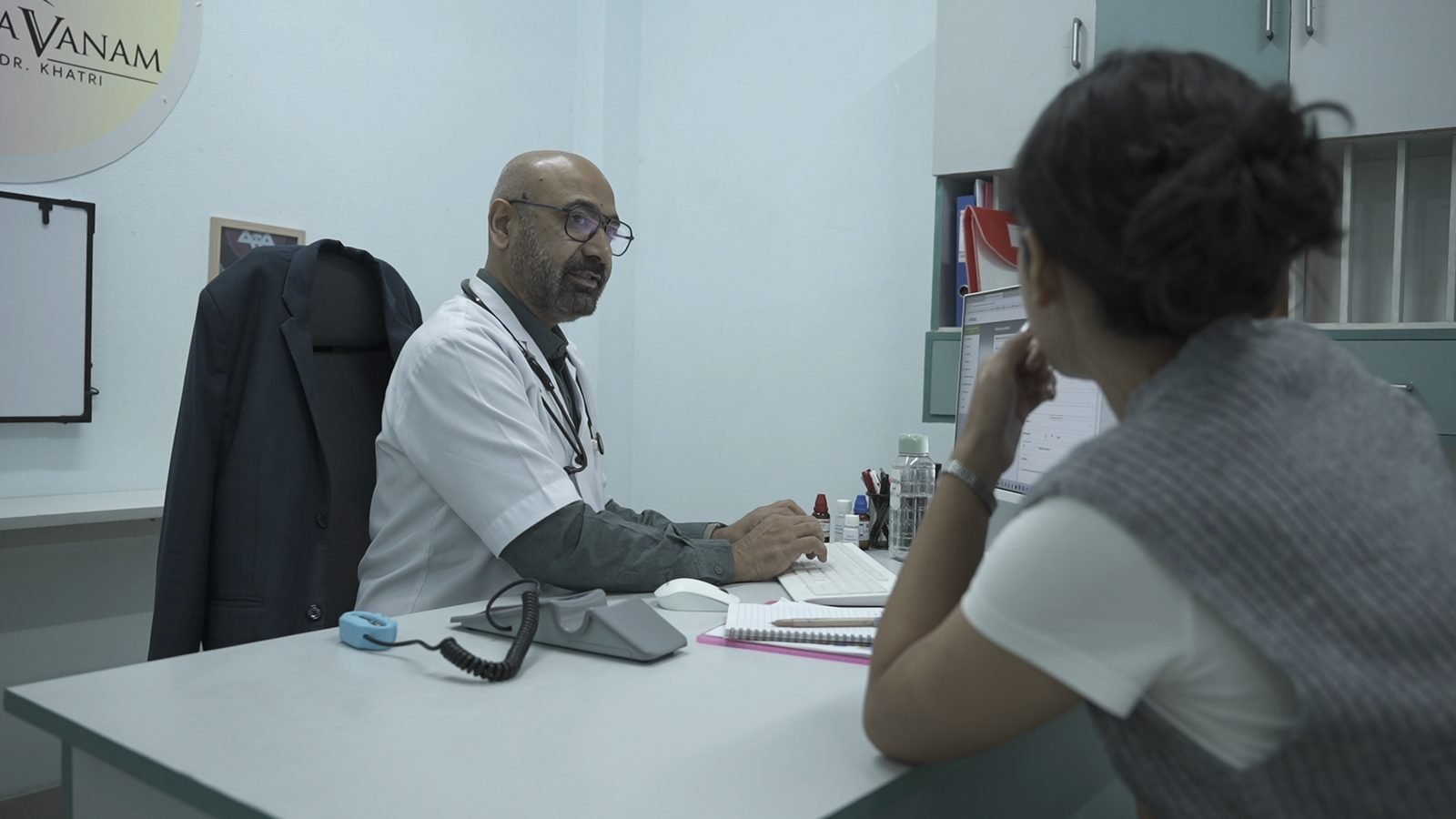
An unhurried first visit (about 30–45 minutes) covering your complaint, history, diet, sleep and temperament. Bring old reports.
Dr. Khatri selects a medicine for you as a person, not just for the disease name. Sweet pills or drops, easy to take.
Review visits every 2–4 weeks to track progress and adjust the medicine. Our team reminds you when a follow-up is due.
As you improve, visits become less frequent. Advice on diet and lifestyle helps keep problems from returning.
Every patient is different. The medicine, dose and length of treatment are decided after a detailed consultation with Dr. Jaidev Khatri.
Self-care
Questions
Many patients with early and moderate piles (grades 1 and 2, and many grade 3) respond very well to homoeopathy along with simple diet and lifestyle changes, and often manage without surgery. Dr. Khatri will examine your case and tell you honestly what to expect, including if a surgical opinion is needed.
Many patients notice less bleeding and pain within the first few weeks. Long-standing piles need regular treatment for a few months to reduce the tendency to recur.
Homoeopathy is widely used in pregnancy under a qualified doctor’s care. Please tell Dr. Khatri that you are pregnant so the medicine and advice suit you.
Not always. Bleeding can also come from a fissure or, less commonly, other bowel conditions. Dr. Khatri will ask the right questions and suggest a check-up or test if needed.
Yes. Many patients prefer a private online consultation by WhatsApp video, Zoom, Google Meet or phone. Medicines can be sent to you by courier.
Related
At the clinic in Itanagar, or online from anywhere in the North East and India.